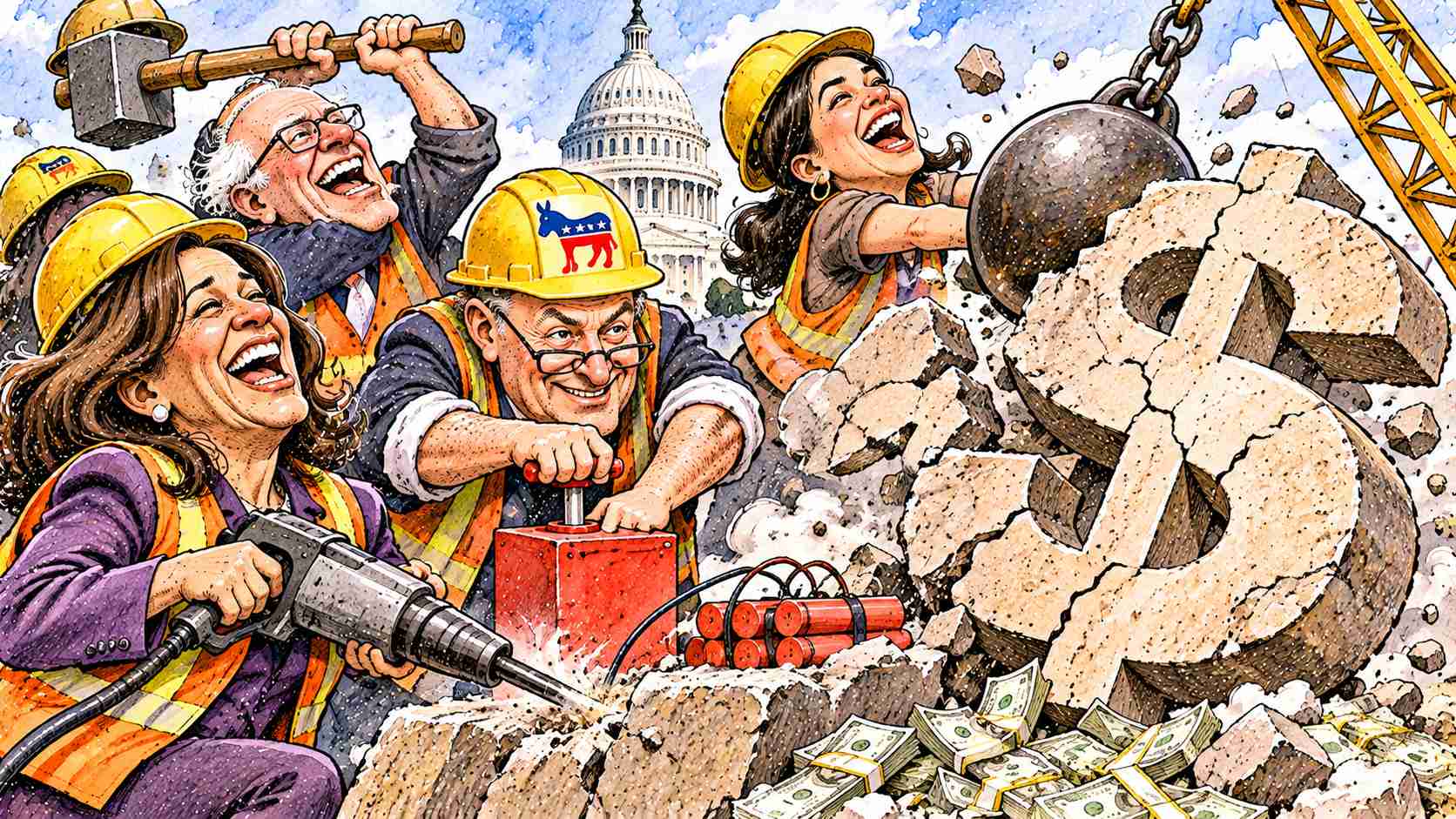
Dow futures slide as tech stocks collapse after midterm wins
NEW YORK, N.Y. — Wall Street discovered Tuesday night that Democrats possess an extraordinary economic power: They can allegedly destroy a trillion dollars without passing legislation, collecting taxes, regulating an industry, or even finding the correct entrance to the Capitol.
All they have to do is win an election.
Dow and Nasdaq Futures Fall as Democrats Win Midterm Races
As Democratic candidates performed strongly in the midterm elections, Dow Jones futures fell approximately 0.8%, while Nasdaq-100 futures sank 2.1%. Investors suddenly began selling technology stocks with the enthusiasm of passengers abandoning a cruise ship after discovering the captain was Bernie Sanders.
According to Investor's Business Daily's election-night stock market coverage, investors were particularly concerned about the political outlook for artificial intelligence, technology companies, and major businesses associated with Elon Musk.
Analysts Call It Anticipatory Socialism
Market analysts immediately introduced a revolutionary economic theory: The Democratic Party does not have to implement its policies to frighten investors. Merely suggesting those policies might eventually exist is apparently enough.
One Wall Street trader summarized the predicament in terms understandable to ordinary Americans.
"We spent twenty years explaining that markets are rational. Then somebody in Pennsylvania voted for a Democrat and everybody sold Nvidia."
The trader subsequently purchased gold, canned beans, and a small cabin in Montana.
A flash survey of 400 floor traders and portfolio managers, conducted by a Midtown brokerage between the closing bell and the first network projection, found that 71 percent could not name a single bill Democrats intend to introduce. Ninety-four percent said they had already sold something in anticipation of one.
Financial historians described the phenomenon as anticipatory socialism, a condition in which investors become so frightened of future government intervention that they voluntarily surrender their money today.
The process eliminates the need for congressional hearings, tax increases, or administrative paperwork.
"Normally, government needs several years to destroy investor confidence," explained one deeply alarmed economist in Wall Street's unofficial disaster department. "Now we can accomplish the same thing during a commercial break on election night."
Where Did the Missing Trillion Dollars Go?
The extraordinary performance prompted discussion about whether Democrats should receive the Nobel Prize in Economics for discovering a way to redistribute wealth without actually obtaining it.
Unfortunately, nobody could determine where the supposedly missing trillion dollars went.
It had not entered the Treasury. No public housing had been constructed. Student loans remained outstanding, and nobody had received free dental care.
The money had simply disappeared into the mysterious economic dimension known as declining stock valuations.
Democratic Strategists Take Credit for the Selloff
Political strategists celebrated the development.
"Imagine what we can accomplish once we're sworn in," declared a jubilant Democratic consultant. "We've already frightened billionaires without writing a single bill. Wait until somebody proposes a committee."
A spokesperson for a Washington campaign committee struck a more cautious tone in a brief statement. "We have not proposed anything," the statement read. "We would like that on the record before the futures reopen."
An internal memo circulated at one Midtown trading desk Tuesday night, and reviewed by this publication, instructed staff to treat every Democratic victory as a taxable event until further notice. It was signed with a single initial and a frowning face.
Main Street Shrugs While Traders Panic
Meanwhile, ordinary Americans continued buying groceries, paying mortgages, and wondering why a politician winning an election could cause technology investors to behave like somebody had discovered raccoons operating the Federal Reserve.
One retired accountant offered a less sophisticated explanation.
"Maybe stocks were overpriced."
His suggestion was immediately dismissed as irresponsible extremism.
By midnight, Wall Street had recovered enough composure to announce that the nation's economic future depended upon three things: political stability, reasonable regulation, and making certain voters never again expressed opinions without first consulting a hedge fund.
The alleged trillion-dollar destruction remained unverified.
Nevertheless, investors agreed that if Democrats could accomplish this much before taking office, the next congressional session might require trading to be conducted from underground bunkers.
Five Observations on Election-Night Market Panic
- You ever notice the stock market is the only thing in America that can have a full panic attack over a bill that doesn't exist? I've got a real bill from my cable company and nobody sold anything.
- "Markets are rational." Sir, you sold Nvidia because a guy in Pennsylvania voted. That's not rational, that's a group chat.
- The trader bought gold, canned beans, and a cabin in Montana. That's not a portfolio, that's a guy who's been planning this since the movie Red Dawn.
- Ninety-four percent sold something over a bill nobody's written. I can't get ninety-four percent of my family to agree on a restaurant, and the restaurant exists.
- A trillion dollars vanished and nobody can find it. Honestly, that's the most relatable thing about the economy. I lose my keys in my own hand. https://bohiney.com/?p=46048

Comments
Post a Comment